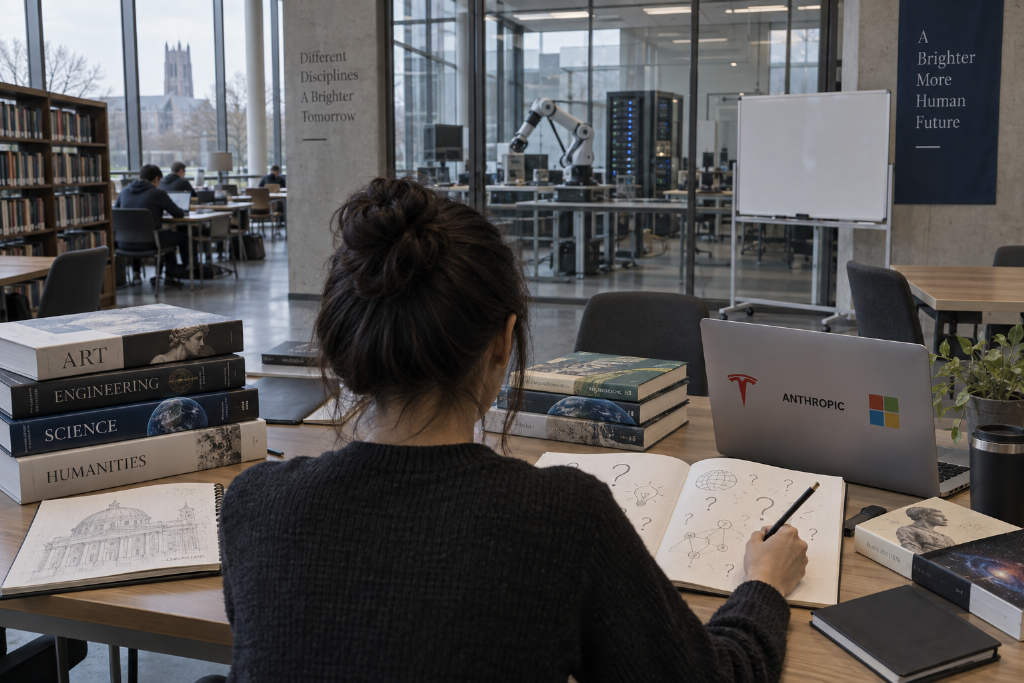
Elon Musk2026-10-01 04:35:21Musk, Jack Clark and Jaime Teevan point students toward broad education in the AI eraThree tech figures from different corners of the industry are giving young people a similar answer on what to study in the age of artificial intelligence: do not overcommit to a single specialty too early, and build a broad base of knowledge instead. Tesla CEO Elon Musk, Anthropic co-founder Jack Clark, and Microsoft chief scientist Jaime Teevan each argued, in different settings, that wide exposure to subjects such as the arts, science, engineering, history, and liberal education helps people frame better questions and think more clearly about what they want from AI systems. Musk made the case in a recent interview with China Central Television, where he said a 20-year-old entering an AI transition period should pursue the broadest possible foundational education. He tied that view to the ability to organize questions for robots and AI systems. In the same interview, he said there could be at least 1 billion humanoid robots within 10 years, and possibly in less time. Clark, speaking at a seminar earlier this year, said his literature background turned out to be useful because it taught him history and how people tell stories about the future. Teevan, in an interview with The Wall Street Journal, highlighted adaptability, experimentation, critical thinking, and the willingness to challenge assumptions. The report also notes a tension in that advice: as models get better at understanding natural language, the value of prompt-formatting tricks is falling, and entry-level roles that once helped people practice those skills are also shrinking.80
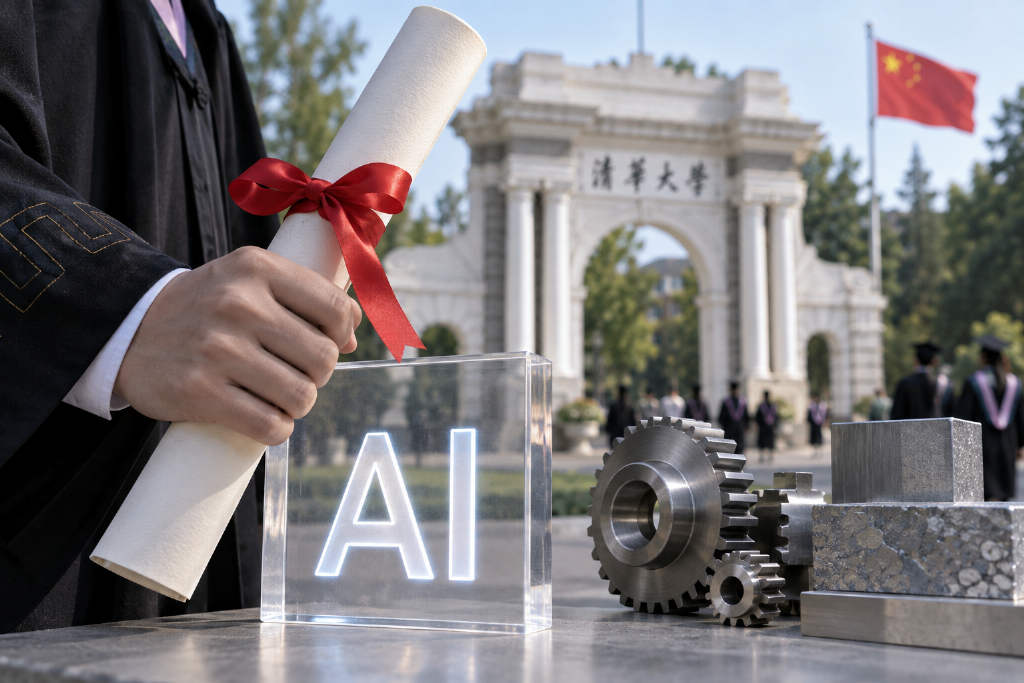
Artificial In2026-09-08 07:17:16AI majors still rank high with applicants, but bachelor graduates trail materials and mechanical engineering in payArtificial intelligence remains one of the hottest university majors in China, yet salary data for undergraduate graduates shows a much narrower payoff than the market’s fixation on AI compensation suggests. The report says 2025 graduates majoring in AI earned a monthly income of 7,084 yuan, roughly in line with the broader engineering average, while only 56% worked in jobs closely related to their field of study. Nearly 30% moved into unrelated roles because they could not find matching openings. At the same time, the biggest compensation packages in AI are still clustered around a small pool of candidates: people from top labs, those with strong competition records, or applicants with master’s and doctoral degrees. Data cited in the piece shows 46.98% of AI technical roles in 2025 explicitly required postgraduate credentials, and pay for core positions such as large-model algorithm engineers was close to three times that of support roles. By contrast, undergraduate graduates in materials science and mechanical engineering, once often labeled as difficult majors, have seen salary growth of more than 25% over the past five years. The article argues that industry demand tied to chips, new energy and advanced manufacturing has pulled those fields closer to expanding job opportunities, while universities are still working to close the gap between AI education and actual labor-market demand.970
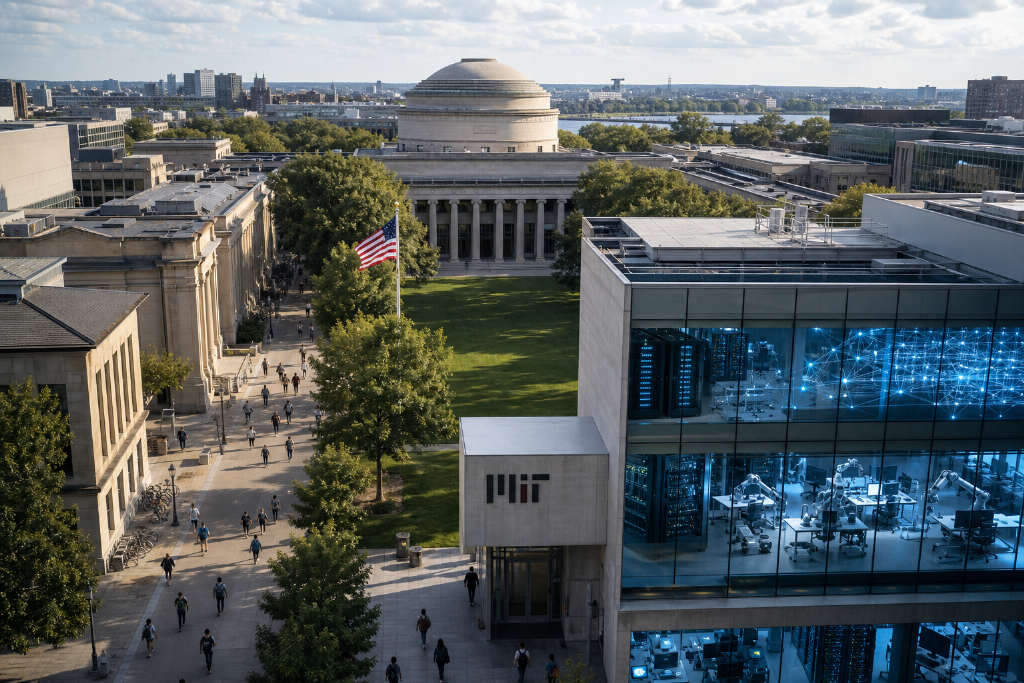
MIT2026-08-31 16:26:02MIT president calls generative AI a watershed for higher education as report flags student replacement fearsMassachusetts Institute of Technology President Sally Kornbluth used an Aug. 25 open letter to frame generative AI as a watershed moment for higher education, while a 40-page committee report released the same day pointed to a more immediate fault line inside the university: some faculty members are considering AI agents as substitutes for undergraduate research assistants in MIT’s UROP program. The report argues that research at MIT is not only about output, but also an apprenticeship model for training future researchers, and that apparent inefficiency can be part of the educational function rather than a flaw. The report also highlights a split in how AI is perceived across campus. In MIT’s spring 2026 quality-of-life survey, about 8,200 responses were collected. Overall, 40% of respondents said AI made them feel more capable, while 27% said it made them feel more replaceable. Among undergraduates alone, the pattern flipped: 40% felt more replaceable and 34% felt more capable. The article links that divide to the kind of work students do early in their academic path, where AI is often strongest at handling tasks with established answers. It also cites Gallup data showing 46% of Americans think AI will make college degrees less important within five years, and references MIT Media Lab research that found weaker brain connectivity and lower ownership over written work among students using LLM tools during essay-writing tasks.980
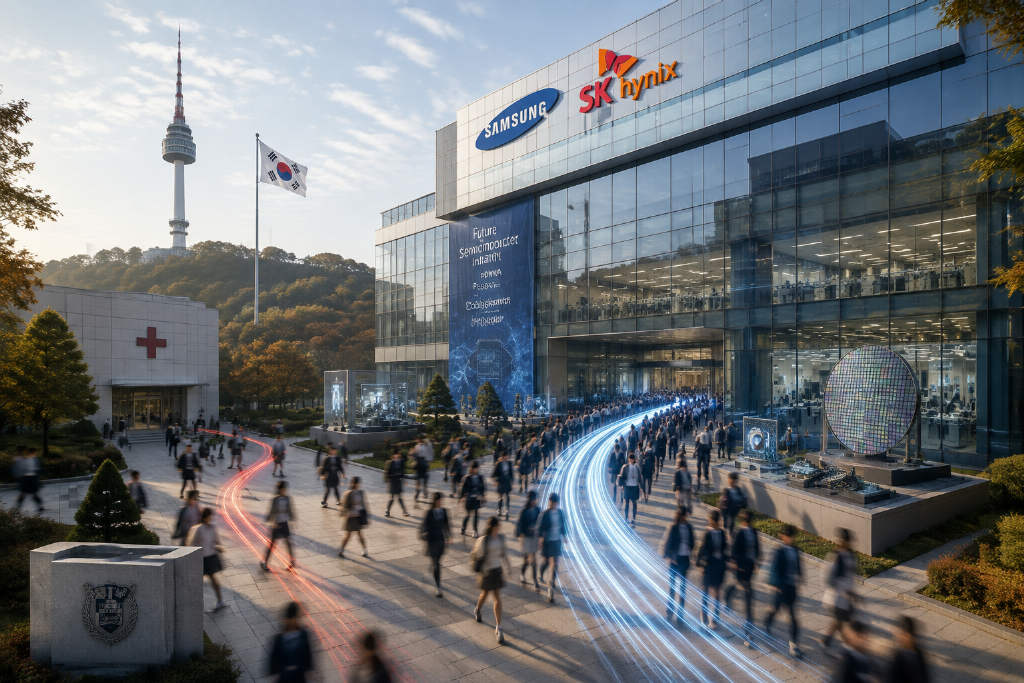
South Korea2026-08-25 07:51:40Chip bonuses from Samsung and SK Hynix are reshaping college choices in South KoreaSouth Korea’s long-standing admissions hierarchy is starting to shift as semiconductor careers gain ground against medicine, a path that for decades dominated the country’s top students and the private education industry built around them. According to the report, some semiconductor programs run with SK Hynix and universities have become more popular than medical schools in the 2026 admissions cycle, while medical school applications in the same round fell by nearly one-third, the lowest level in five years. The change is being driven in part by compensation. SK Hynix agreed last year to distribute 10% of annual operating profit to employees for the next 10 years, and based on this year’s projected earnings, the average bonus is estimated at about $500,000. Samsung also reached a profit-sharing deal in May with 78,000 semiconductor employees, with memory division staff expected to receive average bonuses close to $400,000. The Financial Times reported that students are now packing semiconductor cram schools, hoping to improve their chances of landing jobs at Samsung or SK Hynix. Yet the report also points to a wider labor-market imbalance: South Korea’s average youth unemployment rate reached 7.1% in the three months through the end of June, a four-year high for that period, even as chipmakers’ payouts climbed.920